

What Makes Flooring Antimicrobial, and Where Is It Required?
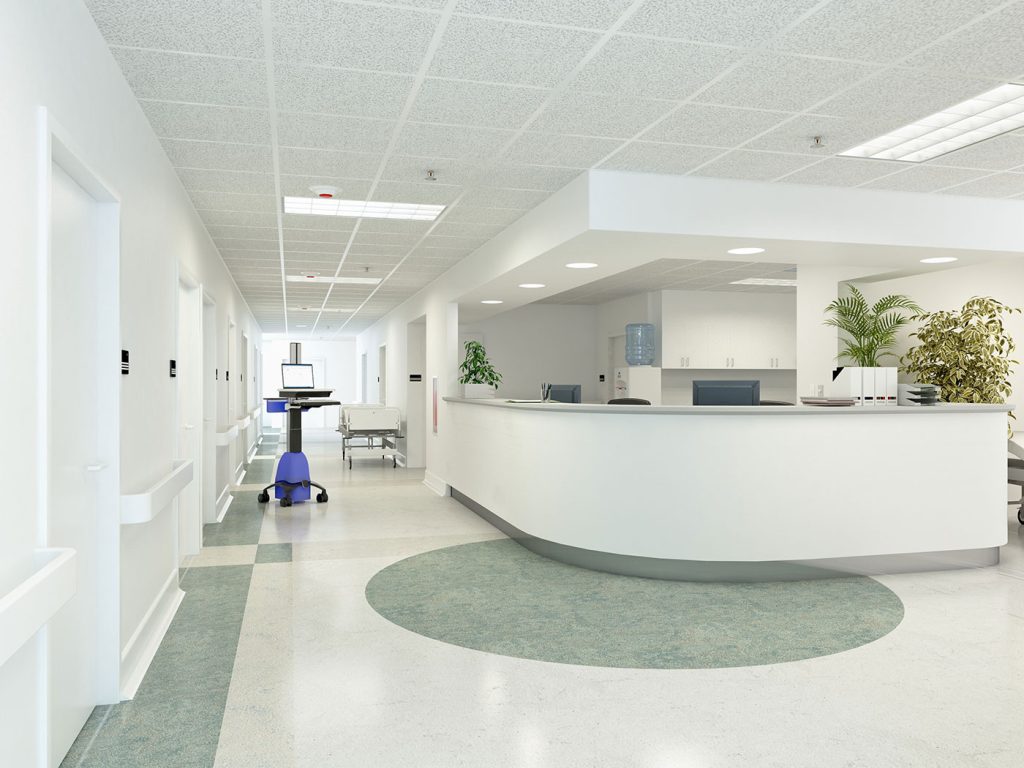
Antimicrobial flooring contains an additive — most commonly silver ions, though zinc and copper compounds are also used — that disrupts the growth of bacteria, mould, and fungi on the floor surface. It is not a disinfectant and it does not replace cleaning. What it does is suppress microbial colonisation between cleaning cycles, particularly in […]
Chemical-Resistant Flooring: Which Systems Handle Which Chemicals?

No flooring system resists every chemical. That single fact is the reason chemical-resistant floors fail — not because the wrong grade was bought, but because a system was specified against a general idea of durability rather than against the specific substances the floor will actually meet. As a broad guide: standard epoxy handles oils, fuels, […]
When Is a Warehouse Slab Past Repairing?
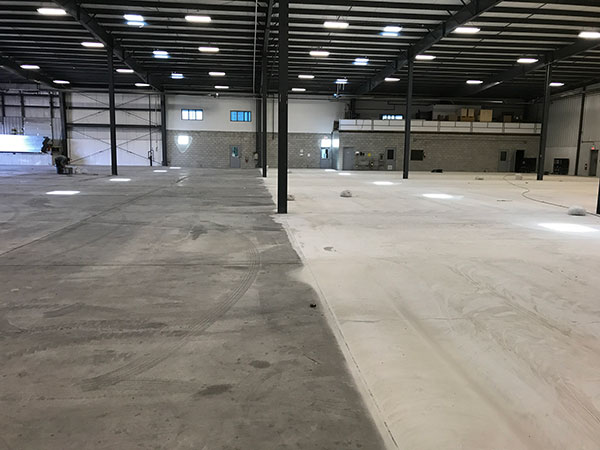
A warehouse slab is past repairing when the damage is structural rather than superficial — when cracks run full depth and move under load, when the sub-base beneath has failed and the slab is settling, or when the total repair area approaches the cost of replacement. Short of those three conditions, almost every warehouse floor […]
Restoring a Warehouse Floor Without Shutting Down

Yes — a warehouse floor can almost always be restored without shutting down. Restoration is localised by nature, which makes it far easier to phase than a full floor installation. Joint repairs, crack filling, and patching happen in defined areas rather than across a continuous pour, so a facility can keep running while work moves […]
Which Warehouse Floor Costs Less Over 10 Years?

Over a ten-year horizon, polished concrete is usually the cheaper warehouse floor — not because it costs less to install, but because it has no recoating cycle. A resinous coating typically needs a new wear layer at some point in that window, and each recoat carries both material cost and downtime. Polished concrete is maintained […]
What Flooring Suits Cold Storage Warehouses?
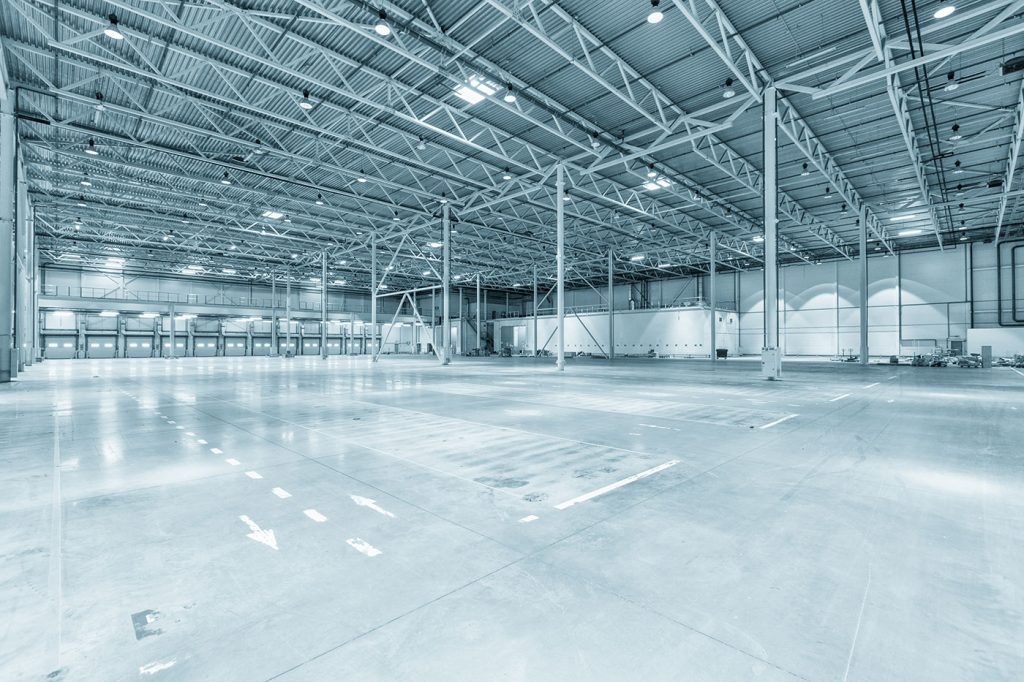
Cold storage and freezer warehouses need flooring that tolerates thermal cycling, not just low temperature. Urethane cement is the usual answer, because it expands and contracts at a rate close to concrete itself and stays bonded where an epoxy system would eventually debond. Standard epoxy becomes brittle at freezer temperatures and struggles with the repeated […]
What Does ANSI/ESD S20.20 Require for Flooring?

ANSI/ESD S20.20 sets two flooring requirements, and most specifications only mention the first. The floor must measure less than 1.0 × 10⁹ ohms resistance when tested to ANSI/ESD STM7.1, and the footwear-and-flooring system must generate less than 100 volts of body voltage during a defined walking test to ANSI/ESD STM97.2. That second requirement is the […]
How Do You Maintain an ESD Floor?
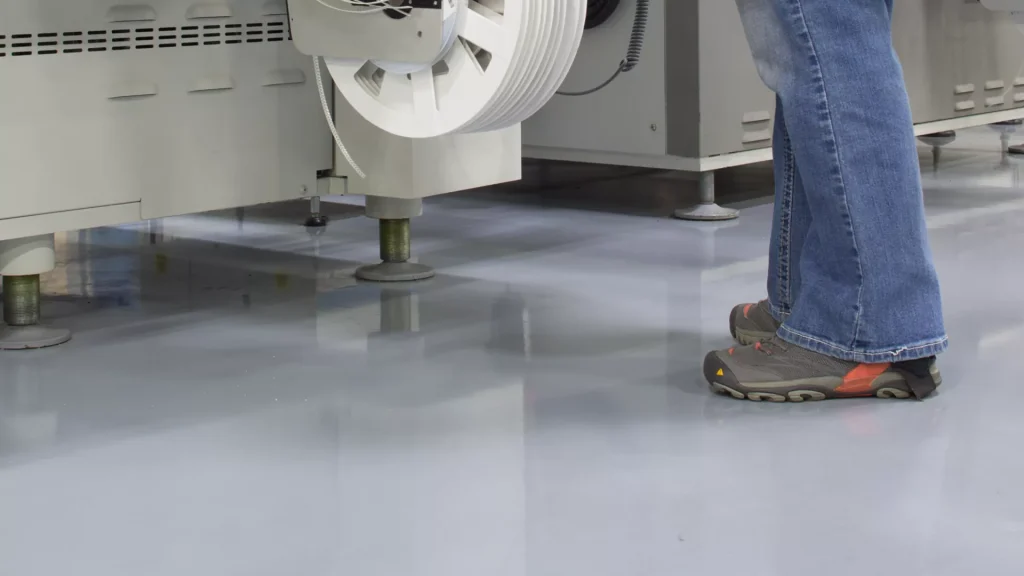
Maintaining an ESD floor comes down to one rule above all others: never apply anything to the surface that was not specified for it. Ordinary floor finishes, waxes, and polishes are electrical insulators. Applied to a static dissipative floor, they sit on top of the conductive path and block it — and the floor keeps […]
ESD Flooring for Electronics Manufacturing in Toronto

Electronics manufacturing facilities in Toronto typically need static dissipative flooring in the 1.0 × 10⁶ to 1.0 × 10⁹ ohm range, grounded to a copper grid and verified for body voltage generation under 100 volts. That specification comes from ANSI/ESD S20.20, which most electronics manufacturers work to either by customer requirement or by certification. What […]
Best Flooring for Warehouses: Epoxy vs Polished Concrete
Warehouses across the GTA depend on their floors more than almost any other building system. Forklift traffic runs constantly, pallet racks impose heavy point loads, and thousands of square feet must stay smooth, safe, and functional through years of demanding use. When it comes time to install or upgrade warehouse flooring, two options consistently rise […]