

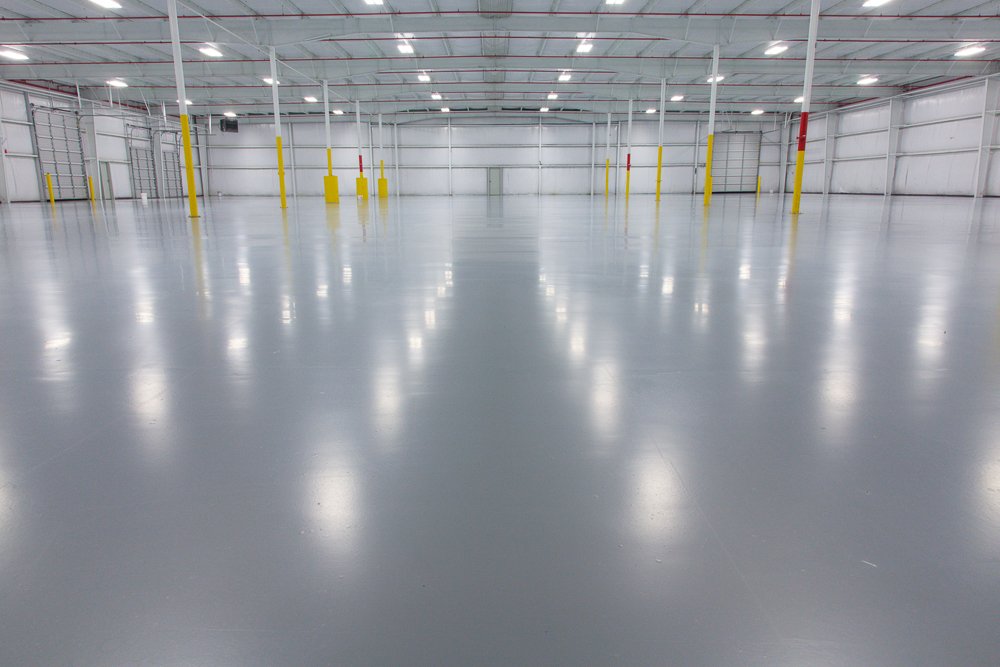
Commercial property owners in Toronto face constant pressure to make smart investment decisions that balance initial costs against long-term value. When it comes to flooring upgrades, epoxy systems represent a significant expenditure that prompts an important question: is the investment actually worth it? The answer depends on your specific property, tenant needs, and how you measure value beyond just upfront costs.
Epoxy flooring has become increasingly popular across Toronto’s commercial real estate market, from retail spaces along Bloor Street to warehouses in Etobicoke, from office buildings downtown to industrial facilities throughout the GTA. This widespread adoption suggests the investment delivers real value, but understanding the specific benefits and returns helps you determine whether epoxy flooring makes sense for your property.
The Real Cost of Commercial Epoxy Flooring in Toronto
Understanding the investment starts with realistic cost expectations. Commercial epoxy flooring in Toronto typically ranges from $6 to $12 per square foot for professional installation, though costs vary based on several factors.
Basic single-coat epoxy systems fall on the lower end of this range. These systems work well for light commercial applications like retail back rooms, office spaces, or areas with moderate traffic. Mid-range systems with decorative flakes, multiple coats, and enhanced durability cost $8 to $10 per square foot. Premium systems including metallic epoxy, heavy-duty formulations, or specialized chemical-resistant coatings reach the higher end of the spectrum.
The concrete condition significantly affects final costs. New concrete in good condition requires minimal preparation beyond basic cleaning and profiling. Older concrete with existing coatings, damage, or contamination requires more extensive preparation that increases labor and material costs. This preparation work, while adding to the initial investment, is essential for long-term performance.
Square footage also impacts pricing. Larger commercial projects benefit from economies of scale, with per-square-foot costs decreasing as project size increases. A 10,000 square foot warehouse gets better pricing than a 1,000 square foot retail space simply because fixed costs like mobilization and equipment spread across more area.
When evaluating costs, Toronto property owners should compare epoxy flooring against alternatives including polished concrete, vinyl composition tile, sealed concrete, or leaving concrete bare. Each option has different initial costs and long-term value propositions that affect the overall financial picture.
Durability and Service Life: The Foundation of Value
The true worth of any commercial flooring investment reveals itself over years of service. Epoxy flooring excels in this area, typically lasting 10 to 15 years in commercial environments with proper installation and reasonable maintenance. Heavy-duty systems in well-maintained properties often exceed 20 years of service.
This longevity stands in stark contrast to many alternative flooring systems. Vinyl composition tile in commercial settings typically requires replacement every 5 to 10 years. Carpet in commercial environments rarely lasts more than 5 to 7 years, especially in high-traffic areas. Even sealed concrete requires regular resealing and shows wear patterns that become unsightly long before epoxy would need replacement.
Toronto’s climate adds stress that some flooring systems struggle to handle. The constant freeze-thaw cycles, tracked-in moisture and salt during winter, and temperature fluctuations between seasons challenge flooring materials. Epoxy’s seamless, bonded structure withstands these conditions without the cracking, peeling, or moisture damage that affects other systems.
The durability factor becomes even more valuable in commercial properties where flooring damage disrupts business operations. A retail store doesn’t need to close for floor repairs. A restaurant doesn’t shut down to replace damaged tiles. A warehouse doesn’t halt operations for floor maintenance. Epoxy’s extended service life means fewer disruptions and lower lifetime costs despite higher initial investment.
Commercial property owners should also consider the appearance retention aspect of durability. Epoxy maintains its appearance throughout its service life when properly maintained. The floor looks professional year after year, which matters for tenant satisfaction and property value. Floors that show premature wear reflect poorly on property management and can affect lease renewals and tenant retention.
Maintenance Savings Add Up Quickly
One of the most compelling value propositions for commercial epoxy flooring is dramatically reduced maintenance requirements compared to traditional flooring systems. These savings accumulate quickly, often justifying the initial investment within just a few years.
Standard commercial floors require regular intensive maintenance. Vinyl composition tile needs periodic stripping, waxing, and buffing. This maintenance is labor-intensive, requires specialized equipment and chemicals, and must be performed regularly to maintain appearance. The ongoing costs include cleaning products, equipment, labor hours, and business disruption during maintenance procedures.
Epoxy flooring eliminates most of this maintenance burden. Regular sweeping or dust mopping removes loose dirt and debris. Periodic damp mopping with mild cleaners handles accumulated soil. That’s essentially the entire maintenance program. No waxing, no stripping, no specialized equipment or harsh chemicals required.
For Toronto commercial properties with in-house maintenance staff, these savings translate to redirected labor toward other property needs. For properties using contracted cleaning services, epoxy flooring reduces monthly service costs substantially. A property manager overseeing multiple commercial tenants can document these savings precisely by comparing maintenance invoices before and after epoxy installation.
The cleaning efficiency also matters for specific commercial applications. Restaurants and food service facilities benefit from easy sanitization that helps maintain health department compliance. Retail stores keep floors looking fresh without extensive daily maintenance. Office buildings maintain professional appearance with minimal janitorial effort.
Spill cleanup represents another maintenance advantage. Epoxy’s non-porous surface prevents liquids from penetrating and staining the floor. Oil, chemicals, beverages, and other spills wipe up completely rather than leaving permanent marks. This characteristic is particularly valuable in automotive facilities, manufacturing operations, and any commercial environment where spills occur regularly.
Performance Benefits That Improve Operations
Beyond durability and maintenance savings, epoxy flooring delivers operational benefits that improve how commercial spaces function daily.
The seamless surface improves safety by eliminating trip hazards from damaged concrete, loose tiles, or worn carpet edges. Slip-resistant additives can be incorporated where needed, creating safer walking surfaces in areas exposed to moisture or spills. For Toronto businesses concerned about liability and worker safety, these features reduce risk and potential insurance claims.
Light reflectivity from epoxy floors enhances illumination throughout commercial spaces. The glossy surface bounces both natural and artificial light, making spaces feel larger and brighter while reducing lighting costs. Toronto retail stores benefit from improved product visibility. Warehouses gain better working conditions with enhanced ambient lighting. Office buildings create more pleasant environments that improve employee satisfaction.
Chemical resistance protects concrete substrates from damage while maintaining safe, compliant environments. Commercial kitchens handle aggressive cleaning chemicals without floor degradation. Automotive facilities resist oil and solvent damage. Manufacturing operations accommodate process chemicals without flooring concerns. This resistance prevents costly substrate damage that would require extensive repairs if chemicals penetrated unprotected concrete.
The customization possibilities through colors, patterns, and integrated safety marking improve both aesthetics and functionality. Line striping for traffic patterns, safety zones, and work areas can be permanently integrated into the floor. Color coding helps organize spaces and improve operational efficiency. These features particularly benefit warehouses, distribution centers, and manufacturing facilities where clear visual organization matters.
Comparing Alternatives: The Complete Picture
Determining whether epoxy flooring is worth it requires comparing it honestly against viable alternatives for Toronto commercial properties.
Leaving concrete bare is the lowest initial cost option, but unprotected concrete deteriorates quickly in commercial environments. Staining, dusting, cracking, and moisture damage require eventual repair or replacement at costs that exceed preventive epoxy installation. The unprofessional appearance also affects tenant satisfaction and property marketability.
Sealed concrete provides some protection at lower cost than epoxy, but requires regular resealing and shows wear patterns much faster. The sealer doesn’t offer the chemical resistance, impact protection, or aesthetic possibilities of epoxy systems. For light-duty applications, sealed concrete may suffice, but most commercial environments benefit from epoxy’s superior performance.
Polished concrete offers excellent durability and aesthetics but requires sound substrate and represents a higher initial investment than epoxy. For properties where budget allows and the aesthetic aligns with design goals, polished concrete is excellent. For properties needing substrate protection, custom colors, or chemical resistance, epoxy provides capabilities polished concrete cannot match.
Vinyl composition tile costs less initially but requires significantly more maintenance and replacement cycles over time. When you factor in 20 years of service life, the total cost of ownership for VCT typically exceeds epoxy while delivering inferior performance and appearance. VCT makes sense in specific applications, but epoxy proves more cost-effective for most commercial uses.
Carpet provides comfort and acoustics but is impractical for most commercial applications beyond offices. The high maintenance requirements, staining issues, and short service life make carpet expensive over time. For commercial environments where epoxy is viable, carpet rarely represents better value.
Calculating Return on Investment
Smart property owners evaluate flooring investments based on total return rather than just initial costs. Several factors contribute to epoxy flooring’s ROI for Toronto commercial properties.
Reduced maintenance costs typically save $0.50 to $1.50 per square foot annually compared to traditional flooring systems. Over a 15-year service life, these savings alone can equal or exceed the initial installation cost. The savings are documented and measurable, not theoretical projections.
Extended service life eliminates replacement cycles that other flooring systems require. Avoiding one or two replacement projects over 20 years saves not just material and labor costs but also business disruption and tenant inconvenience. These avoided costs represent real value that benefits property bottom lines.
Improved tenant satisfaction and retention affect property value significantly. Commercial tenants appreciate attractive, low-maintenance spaces that support their operations. Properties with quality infrastructure including professional flooring command higher rents, experience better tenant retention, and maintain higher occupancy rates. These benefits compound over years of ownership.
Energy savings from improved light reflectivity reduce operating costs in commercial buildings. While not dramatic, the reduced lighting requirements add up over years. For large commercial properties, even modest percentage reductions in energy use represent meaningful savings.
Property value increase from infrastructure improvements benefits owners planning to sell. Potential buyers evaluate deferred maintenance and needed improvements when making offers. Properties with quality flooring systems in place avoid purchase price deductions for needed floor work and present better overall condition.
Frequently Asked Questions About Commercial Epoxy Flooring Value
How long does it take to recoup the investment in commercial epoxy flooring?
Most Toronto commercial properties recoup their epoxy flooring investment within 3 to 7 years through maintenance savings alone. Properties with high maintenance costs under previous flooring systems see faster payback, sometimes within 2 to 3 years. The calculation depends on square footage, previous maintenance costs, and the specific epoxy system installed. When you include avoided replacement costs and other benefits, the complete ROI picture often shows positive returns within the first 5 years. Over the full 15 to 20 year service life, epoxy typically delivers 200 to 400 percent return on investment compared to alternative flooring systems.
Does epoxy flooring increase commercial property value?
Quality epoxy flooring contributes to property value by improving condition, reducing deferred maintenance, and enhancing marketability to tenants and buyers. While flooring alone doesn’t determine property value, well-maintained infrastructure including professional flooring systems supports higher valuations. Properties with recent flooring upgrades avoid buyer deductions for needed work and present better in due diligence. The increased appeal to quality tenants also supports premium rents that improve cap rates and property values. The contribution varies by property type and market, but professional flooring consistently adds value relative to bare or poorly maintained concrete.
What commercial properties benefit most from epoxy flooring?
Retail stores, showrooms, restaurants, automotive facilities, light manufacturing operations, warehouses, and office spaces all benefit significantly from epoxy flooring. Properties with moderate to high foot traffic, wheeled equipment, or chemical exposure see the greatest returns. Facilities requiring frequent cleaning or sanitation benefit from easy maintenance. Properties where appearance directly affects customer experience or business operations gain competitive advantages. Essentially, any Toronto commercial property where the floor experiences meaningful use and affects operations, safety, or tenant satisfaction benefits from epoxy installation.
Can epoxy flooring be installed in occupied commercial spaces?
Yes, epoxy flooring can be installed in occupied commercial buildings with proper planning and scheduling. Most installations complete within 3 to 5 days, and work can often be scheduled during off-hours, weekends, or in phases to minimize business disruption. Tenants may need to relocate temporarily depending on the space and fume sensitivity, though modern low-odor epoxy systems reduce this concern. Fast-cure options allow even quicker return to service for businesses that cannot afford extended closures. Professional contractors work with property managers and tenants to develop installation schedules that balance quality with operational needs.
Make an Informed Decision About Your Commercial Flooring Investment
Epoxy flooring represents real value for Toronto commercial properties when you look beyond initial costs to examine total lifetime performance, maintenance savings, and operational benefits. The investment pays dividends through reduced maintenance, extended service life, improved tenant satisfaction, and enhanced property value.
The question isn’t whether epoxy flooring is worth it in general, but whether it’s the right investment for your specific property and situation. The answer depends on your property type, tenant needs, budget parameters, and ownership timeline.
With over 30 years of experience serving Toronto’s commercial real estate market, Armour Guard helps property owners make informed decisions about flooring investments. We provide honest assessments, realistic cost projections, and professional recommendations based on your specific circumstances rather than pushing one solution regardless of fit.
Contact Armour Guard today to discuss your commercial property flooring needs. We’ll evaluate your situation, explain your options, and provide detailed proposals that help you understand exactly what you’re investing in and what returns you can expect. Make flooring decisions based on complete information and professional guidance from contractors who understand Toronto’s commercial market.
