

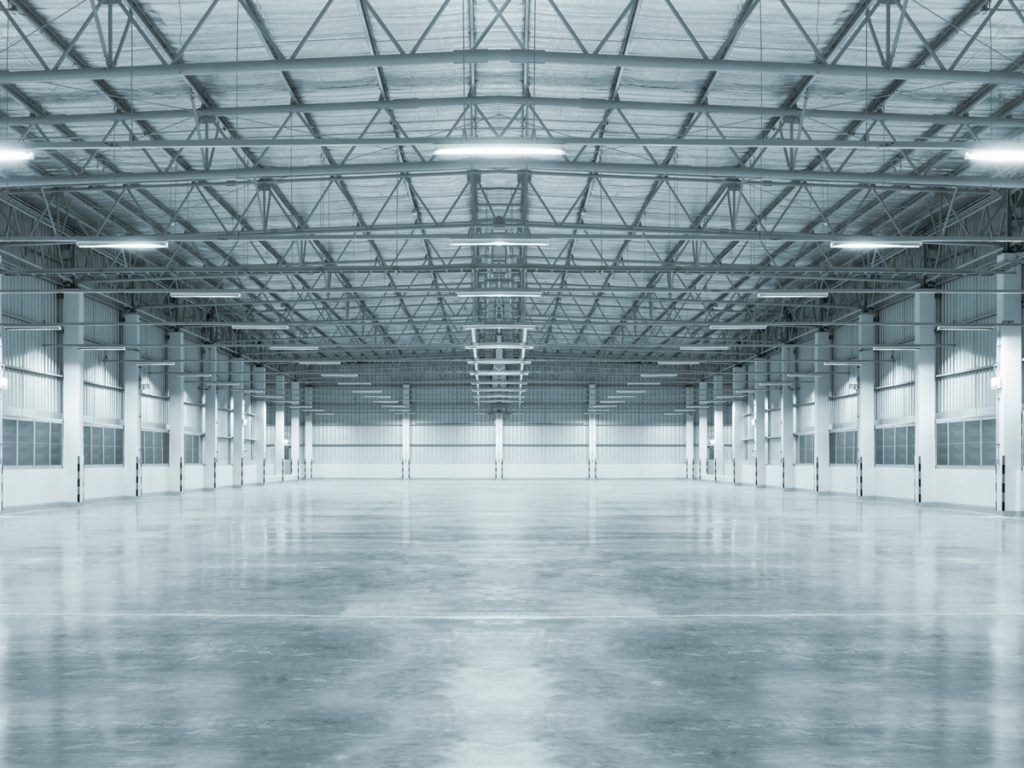
Concrete dust in a warehouse is not just untidy. It is the surface of your floor breaking down and becoming airborne, and it settles into inventory, packaging, bearings, and lungs. The dust comes from a process called dusting, where the top layer of a concrete slab loses cohesion and powders under traffic. Every forklift pass grinds a little more of it loose.
The fix is not sweeping more often. Sweeping removes today’s dust while tomorrow’s is generated by the same failing surface. The floor has to be sealed, densified, or resurfaced so it stops producing dust in the first place.
Why Concrete Slabs Dust
The top few millimetres of a slab are the weakest part. During placement, water and fine particles rise to the surface — a process called bleeding — and if the concrete is finished while that bleed water is still present, the surface layer ends up with a high water content and low cement content. It cures soft.
Other contributors:
- Inadequate curing — a slab that dried too quickly never developed proper surface strength
- Cold-weather placement — concrete placed in Toronto winter conditions without adequate protection cures poorly at the surface
- Freeze-thaw damage — repeated cycling breaks down the surface layer over years, particularly near loading bay doors
- Abrasion — decades of forklift traffic wearing through to weaker material below
- Chemical attack — spills that etch and soften the surface
Once dusting starts it is self-reinforcing. Loose dust acts as an abrasive under wheels, accelerating wear on the surface that produced it.
What Dusting Actually Costs
Equipment wear
Concrete dust is abrasive silica. It gets into forklift bearings, wheel assemblies, hydraulic seals, and conveyor components. Maintenance intervals shorten and component life falls. In an automated facility with sorters and conveyors, the exposure is continuous.
Product and packaging contamination
Dust settles on everything. Cardboard picks it up, palletised goods arrive at customers with a grey film, and in food, pharmaceutical, or electronics environments it moves from cosmetic to a compliance concern.
Air quality
Respirable crystalline silica is a recognised occupational hazard. Ontario workplaces have exposure obligations under occupational health and safety legislation, and a persistently dusting floor in an enclosed warehouse contributes to airborne particulate throughout the shift. This is worth raising with whoever manages your health and safety programme.
Cleaning labour
Facilities with dusting floors often run sweepers continuously and still lose the battle. That is recurring labour spent managing a symptom.
The floor itself
Dusting is the surface failing. Left alone, it progresses to scaling and then to exposed aggregate, at which point the repair is considerably more involved than it would have been.
How to Stop It
Densifying
A chemical densifier penetrates the concrete and reacts within the pore structure, hardening the surface from within. On a slab that is dusting but otherwise sound, this is often the most cost-effective solution available — it does not add a layer, so there is nothing to wear off or delaminate.
Densifying is usually combined with grinding, which removes the weakest surface material first so the densifier reacts with sound concrete.
Polishing
Mechanical polishing takes this further, grinding through the soft layer entirely and refining what remains into a dense, closed surface. It eliminates dusting and delivers a durable, low-maintenance floor at the same time.
For warehouses this is frequently the best value option, and it holds up under forklift traffic — see whether polished concrete handles forklift traffic.
Sealing
A penetrating sealer locks the surface and prevents particles releasing. Less durable than densifying and polishing under heavy traffic, but quick and inexpensive for lower-traffic areas.
Coating
A resinous coating encapsulates the surface entirely and eliminates dusting completely. It is the right answer where you also need chemical resistance or safety marking. It requires a sound substrate — coating over a dusting surface bonds the coating to loose material, and it fails.
Resurfacing
Where the soft layer runs too deep for grinding to reach sound concrete economically, an overlay rebuilds the wearing surface. We cover that decision in when a concrete floor needs resurfacing instead of coating.
What Not to Do
Do not simply coat over it. This is the most common mistake. A coating applied to a dusting surface bonds to the loose material rather than to the slab, and it delaminates in sheets. The surface must be ground back to sound concrete first.
Do not rely on sweeping. It manages the symptom and, because the dust is abrasive, dragging it around under wheels contributes to further wear.
Do not assume it is cosmetic. Dusting means the surface is actively deteriorating. The floor is telling you something.
Finding Out Which Fix You Need
The deciding factor is how deep the soft layer runs. A slab dusting from a thin weak surface layer is a grinding and densifying job. A slab that has been dusting for a decade may need material removed to a depth where an overlay makes more sense.
That is established by assessment, not by looking at the floor.
Armour Guard has resolved dusting floors in warehouses across Toronto and the GTA for more than 30 years, through commercial concrete polishing, densifying, and warehouse concrete restoration where the surface has gone too far.
Contact our Toronto team to find out what your slab needs.